
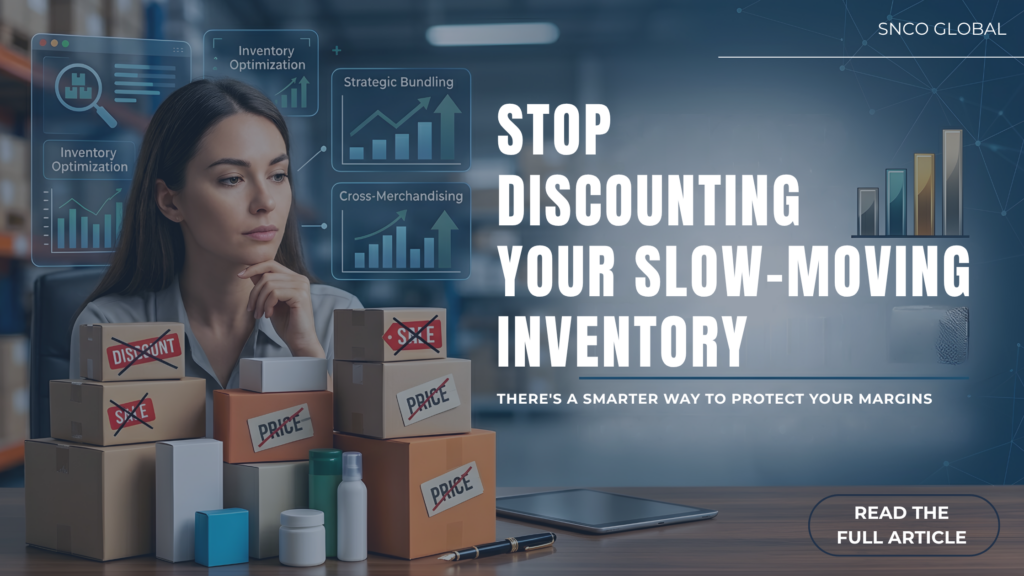
Introduction: The Discount Trap Most Retailers Fall Into
If you run a retail store or garment business, you’ve probably been there.
A few products just aren’t moving. Weeks pass. The shelves look the same. So you do what feels logical you slash the price. 20% off. Then 50% off. Then Buy 1 Get 1. The stock clears eventually, but when you look at your numbers, your margins have taken a serious beating.
This is one of the most common and costly mistakes in retail inventory management. And the frustrating part? There’s a better way one that most store owners simply haven’t considered.
Why Discounting Feels Like the Answer (But Isn’t)
Heavy discounting is the go-to strategy because it works at least on the surface. The stock moves. The shelves clear. But what’s the actual cost?
When you consistently offer steep discounts to clear slow-moving inventory, you’re essentially training your customers to wait for sales. Worse, you’re eating into the profitability of products that may have sold at full price with the right push.
The real problem isn’t the product. It’s the strategy.
A Smarter Approach: Incentivize Your Sales Team Instead
Here’s a method that has worked in real retail businesses and it doesn’t require a single rupee of customer discount.
How It Works
Step 1: Tag Slow-Moving Products Separately in Your ERP
In your billing or inventory management system, create a separate category or barcode for products that have been sitting beyond a defined threshold say, 60 or 90 days. This simple tagging is the foundation of the entire strategy.
Step 2: Track These Items Independently
Once tagged, these slow-moving items are monitored as a separate inventory bucket. This gives you real visibility into which products need attention and how fast they’re moving after the intervention.
Step 3: Offer Your Sales Team a Per-Piece Incentive
Instead of discounting for the customer, reward your own salesperson for every slow-moving item they sell. Even a small incentive say ₹10-₹50 per piece depending on the product value can dramatically change salesperson behaviour.
What Happens When You Do This
The results of this approach are straightforward but powerful:
- Stock starts moving : salespeople actively recommend and push slow-moving products rather than defaulting to bestsellers.
- Customer discounts are avoided : the customer pays full price (or a very minimal markdown), preserving your margin.
- Margins are protected : he cost of the incentive is far lower than the margin lost through heavy discounting.
- Your sales team is motivated : incentive-linked selling boosts morale, engagement, and overall performance.
Real-World Application: What This Looks Like in Practice
Let’s say you run a garment store and have 200 units of a specific shirt style that’s been sitting for three months.
The old approach: Mark it down 40%, run a social media post, sell 150 units at a loss, and donate or dump the rest.
The smarter approach: Flag those 200 units in your ERP. Brief your sales team. Offer them ₹30 per piece sold. Over the next 30 days, your team actively suggests this shirt to customers who come in for other items. No discount required. Most units sell at full price. Your team earns a bonus. You retain your margin.
Key Retail Inventory Management Principles This Strategy Relies On
1. Visibility is Everything
You can’t manage what you can’t see. Tagging and tracking slow-moving inventory separately gives you actionable data instead of a vague sense that “some things aren’t selling.”
2. Internal Incentives Often Outperform External Discounts
Motivating your own team costs less than motivating your customer through price cuts. A salesperson with skin in the game is your most powerful sales tool.
3. Margins Are Built on Decisions, Not Just Pricing
Margin erosion in retail is rarely dramatic it’s death by a thousand discounts. Every strategic decision around inventory clearance compounds over time.
How to Implement This in Your Store: A Quick Checklist
- Define your slow-moving threshold (e.g., no sale in 60–90 days)
- Tag slow-moving SKUs in your ERP or POS system
- Set a per-piece incentive for your sales team
- Brief your team on what to push and why
- Track weekly how many units move vs. the previous period
- Review margin impact at month-end
Common Objections -Answered
What if my salespeople push slow-movers on customers who don’t need them?
A trained salesperson knows how to match products to customer needs. The goal is awareness and recommendation, not pressure. Good retail training covers this.
Won’t the incentive cost eat into my margin anyway?
Compare ₹30 per piece incentive vs. selling at 40% discount on a ₹500 product (₹200 lost). The incentive model almost always wins.
My ERP doesn’t support separate tagging.
Even a simple Excel tracker or a manual label system can work. The concept matters more than the tool, especially when you’re starting out.
Conclusion: Are You Discounting Your Stock, or Managing It Strategically?
The retail businesses that protect their margins long-term aren’t the ones with the deepest discounts, they’re the ones with the smartest internal systems and motivated teams.
Slow-moving inventory is not a death sentence. It’s an opportunity to deploy a smarter strategy. Before you reach for the discount gun next time, ask yourself: have I given my team the right incentive to move this stock first?
That one shift in thinking could save you thousands in lost margin every single season.
If you found this useful and run a retail or garment business, share this with someone who needs to hear it. And if you’d like help building an inventory management system or incentive structure for your store, feel free to get in touch.